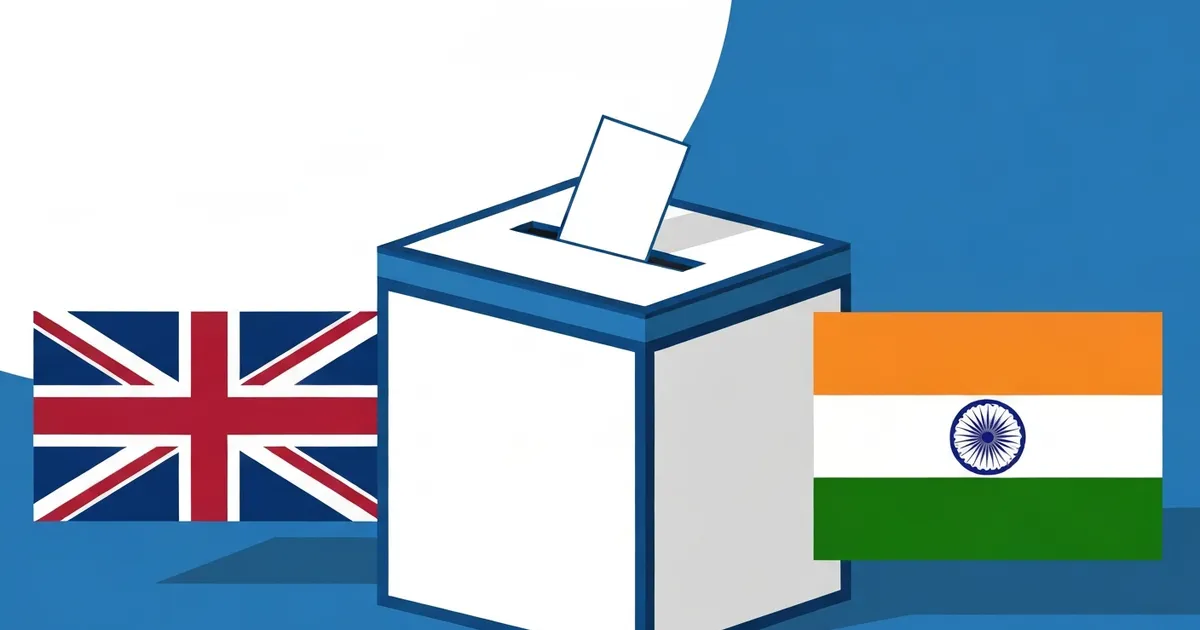
TL;DR: The Home Office has announced the second and final 2026 ballot for the India Young Professionals Scheme visa will open on 21 July. There are 3,000 visa places annually, with a random selection from ballot entries. Successful applicants have 90 days to submit their full visa application and pay the requisite fees.
Announcing its final ballot for 2026, the UK Home Office has opened a crucial pathway for Indian nationals seeking to work and live in the United Kingdom through a structured scheme. The India Young Professionals Scheme is a bilateral agreement allowing up to 3,000 Indian citizens each year to come to the UK for up to two years of professional experience. Unlike standard work visa routes, which rely on securing employer sponsorship, this dedicated scheme is managed via a randomised ballot system. The latest Home Office guidance confirms key dates for the July 2026 ballot, marking the final opportunity for prospective applicants to secure one of the allotted places for the year. This controlled allocation system distinguishes the India Young Professionals Scheme visa from other skilled worker categories, creating a distinct application timeline and procedural requirement for all eligible candidates.
What is the India Young Professionals Scheme Visa Ballot System?
The India Young Professionals Scheme visa ballot is a Home Office-administered random selection process used to allocate the limited number of available visa places. As part of a broader bilateral mobility partnership, the UK offers up to 3,000 visas annually to eligible Indian citizens aged 18 to 30. Given the demand for this two-year work and life experience opportunity, potential applicants must first enter a free, time-limited ballot. According to the official guidance, successful entries chosen at random are then invited to proceed with the formal visa application, which includes paying the £340 application fee and the Immigration Health Surcharge.
The 2026 Ballot Schedule and Remaining Quota
The Home Office has delineated a precise timeline for the second and concluding ballot of the 2026 cycle. The ballot will open at 1:30pm India Standard Time on 21 July 2026 and close exactly 48 hours later, at 1:30pm IST on 23 July 2026. The published guidance reiterates that the link to access and enter the ballot will be available on the official GOV.UK page during this window. It is essential to note that this July ballot represents the final allocation of places for the 2026 annual quota of 3,000 visas. The majority of these places were allocated during the first ballot held in February 2026, with the remainder now available for the July drawing. For prospective applicants, this final ballot represents the last chance to secure an invitation to apply for this specific visa route within the 2026 calendar year.
The random selection nature of the ballot underscores its function as a fair allocation mechanism for a capped resource. The updated guidance stresses that individuals may only submit a single entry per ballot. Any duplicate or subsequent attempts to enter will be disregarded by the system, ensuring an equitable chance for all participants. Upon the ballot’s closure, the results are processed internally, with successful entrants being notified by email within a two-week period. The Home Office states that the results are final, and there is no formal appeals process for unsuccessful ballot entrants.
How Does the Ballot Entry and Subsequent Visa Application Process Work?
The entry process for the ballot is distinct from the visa application itself. To participate, an individual must be an Indian citizen and must first confirm they meet all the eligibility criteria for the full visa. This includes holding an eligible qualification – typically a Bachelor’s degree or above – and possessing sufficient personal savings for self-support in the UK. The ballot entry itself requires submitting basic personal details, including full name, date of birth, passport number and expiry date, alongside a scanned copy or photograph of the passport’s biographical page, a phone number, and an email address. Crucially, there is no fee to enter the ballot.
For those selected successfully, the real application process begins. The official invitation email serves as the essential document granting permission to apply. From the date of this email, the successful candidate has a non-extendable 90-day window to complete several mandatory steps. These include formally applying online via the designated Home Office application portal, paying the £340 visa application fee, paying the compulsory Immigration Health Surcharge, and subsequently booking and attending an appointment to provide biometric information (fingerprints and a photograph). Failure to complete all steps within this three-month period will result in the invitation lapsing.
The updated guidance notes: “You have 90 days from the date of the email to: apply online for the visa, pay the visa application fee and immigration health surcharge, [and] provide your fingerprints and photo (biometric information).”
What Are the Critical Eligibility and Compliance Requirements?
While the ballot itself is relatively straightforward, the underlying eligibility requirements for the visa are stringent and must be met at both the ballot entry stage and at the point of formal application. The core eligibility hinges on nationality, age, education, and financial standing. Applicants must hold a valid Indian passport, be aged between 18 and 30 at the time of application, and possess a minimum qualification equivalent to a UK Bachelor’s degree. Furthermore, candidates must demonstrate they have held a specified minimum amount of personal savings for at least 28 consecutive days prior to the date of their formal visa application, proving they can support themselves without recourse to public funds.
The Home Office guidance explicitly advises individuals to only enter the ballot if they are certain they meet these criteria and intend to proceed with the £340 visa application if selected. It also clarifies that a successful ballot entry is not a visa guarantee; the subsequent full application is subject to standard Home Office scrutiny, and a visa can still be refused based on individual circumstances, including meeting the immigration rules or providing fraudulent documentation. For those who are successful in the ballot but later decide not to apply, no action is required, and the invitation will simply expire after the 90-day window.
Implications for Sponsors and Employers
The India Young Professionals Scheme operates outside the UK’s points-based immigration system and does not require a Certificate of Sponsorship from a UK employer. Consequently, its direct implications for UK sponsors and businesses differ from standard Skilled Worker visa routes. Organisations interested in recruiting individuals under this scheme should note that, while visa holders have the right to work, they are not tied to a specific sponsoring employer. This offers flexibility for both the visa holder and potential UK employers, as the individual can change jobs without the employer needing to hold a sponsor licence or initiate a visa transfer.
However, employers must still conduct standard right-to-work checks once an individual is hired. The visa document or digital status will confirm the holder’s eligibility to work under the terms of the India Young Professionals Scheme. For sectors seeking to attract international talent from India, awareness of this scheme’s ballot calendar is advantageous, as it identifies periods when a new cohort of eligible young professionals may be entering the UK labour market. Sponsors with existing Indian graduate talent may also explore this as a potential route for retaining individuals after their studies in the UK, depending on their age and eligibility.
Frequently Asked Questions
Q: If I am unsuccessful in the July 2026 ballot, can I enter again? A: Yes. The Home Office guidance confirms that individuals who are unsuccessful in one ballot may enter future ballots, provided they continue to meet all the eligibility criteria at the time of each new ballot entry. The scheme operates on an annual basis, with ballots typically held in the first and second halves of each calendar year.
Q: How many India Young Professionals Scheme visas are available? A: There is an annual quota of 3,000 visas under this bilateral agreement. For the 2026 cycle, these places were split between two ballots: the first in February and the second, final ballot in July. The exact number of remaining places for the July 2026 ballot has not been published, as it depends on uptake from the first ballot earlier in the year.
Q: Is there a cost to entering the ballot? A: No. Entering the ballot for the India Young Professionals Scheme is completely free. Costs are only incurred if an individual is successful in the ballot and then proceeds to make a formal visa application, at which point the £340 application fee and the Immigration Health Surcharge become payable.
Q: What happens after I am notified of a successful ballot entry? A: Receiving a successful ballot notification email grants a 90-day window to complete the formal visa application process. This involves completing an online application form, paying the required fees, and attending a biometrics appointment. The visa itself, if granted, is typically valid for up to 24 months.
Q: Can I apply for the visa without entering the ballot? A: No. According to the Home Office guidance for this specific visa route, entering and being selected via the official ballot is a mandatory first step. The online visa application system for the India Young Professionals Scheme will not be accessible to individuals who have not received a formal invitation following a successful ballot draw.
Key Takeaways
- The final ballot for the 2026 India Young Professionals Scheme visa quota opens on 21 July 2026 at 1:30pm IST and closes on 23 July 2026 at 1:30pm IST.
- The scheme offers up to 3,000 places annually to Indian citizens aged 18-30, allocated via a free, random ballot system.
- Ballot entry is conditional on meeting all visa eligibility criteria, including holding a relevant qualification and sufficient maintenance funds.
- Successful entrants have a strict 90-day deadline from the invitation email to submit their full visa application and pay the £340 fee and Immigration Health Surcharge.
- The ballot results are final, with no appeals process, but unsuccessful candidates can enter subsequent ballots if they remain eligible.
Conclusion
The India Young Professionals Scheme provides a unique, non-sponsored route for qualified Indian nationals to gain professional experience in the UK. The July 2026 ballot represents the last opportunity for eligible individuals to secure one of the allocated places for the current year. The process, governed by strict timelines and a random selection mechanism, requires careful attention to eligibility details and a clear understanding of the sequential steps from ballot entry to full visa application. While offering a valuable route for mobility, its capped nature and dependence on the ballot system render planning and timely action essential for prospective applicants.